Thursday, October 23, 2008

The Beatles v. Apple


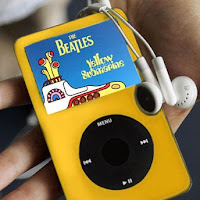
For a fleeting moment this week, Beatles fans were hopeful that the band's music would finally be available on iTunes. Bloomingdale's announced that it would sell a special Beatles iPod. While many though this would mean that the Beatles would finally be allow their music on iTunes, this was not to be. The special edition iPod comes with the entire Beatles catalogue on CDs and users must upload these CDs to the iPod. The device isn't a collaboration between the band and Apple, it is simply a product of Bloomingdale's


When iTunes first debuted there were several bands and music artists that refused to allow their music to be distributed through the iTunes store. As the popularity of digital music and the huge success of iTunes, many of the bands that orginally held out have embraced the technology - except for one: The Beatles. For many, the refusal of the band to be distributed via iTunes is somewhat of a suprise. The band was know not only for creating revolutionary music through innovative recording practices and marketing techniques, so many assumed that they would be among the first to adopt legal, on-line music distribution. But the reason the band's catalogue is unavailable on iTunes is not due to a fear of piracy. Rather, The Beatles have an issue with Apple, the company that created iTunes. In 1968 The Beatles created Apple Records. When Apple Computers was founded, it reached an agreement with the Beatles, that because the company shares its name with the the record company, Apple Computers would not enter the music business. At the time it seemed logical, but as technology has improved, Apple computers has become dependant on its music distribution. Apple Records eventually sued Apple Computers, and in 2006 the judge ruled that Apple Computers did not violate copyright rules. With the end of the lawsuit, many fans hoped that The Beatles would finally be allowed on iTunes. So far, this has not happened, but fans across the world continue to hope that The Beatles will one day embrace the digital music revolution.
Piracy still an issue for record labels


For years, Internet users have been able to store their computer files on-line as a way of backing up their hard drives. So it should be no surprise that companies have started to store music files on the Internet. This of course has lead to cries of piracy from the record companies. This week, EMI filed a lawsuit against MP3tunes.com, a site that allows users to upload music files to a music "locker," which can then be accessed by wireless devices such as cell phones. This allows users to access their files from pretty much anywhere, and also provides a means of protecting their files.

The argument that EMI has raised is that MP3tunes.com allows anybody to access the locker, not just the legal owners of the music files.


With the record companies' fight against peer-to-peer file sharing and now on-line music lockers, it would seem that the major labels are bent on making sure that CDs are the major form of music distribution. This is another case of a large corporation being unwilling to change its philosophy in order to embrace new technology and remain a major competitor in its market. This failure to change has been the downfall of companies such as IBM and AT&T, and if record companies wish to remain competitive they should stop fighting the coupling of technology and the music industry. Surely, EMI could set up its own music locker, that would allow users to upload music files, and could create measures to ensure that only the legitimate owners of the music files could access the site. No matter what EMI chooses to do, it should stop fighting against technology and learn to embrace it.
To read more about EMI's lawsuit, go to CNET.com. For more about music lockers, see Minyanville.com.


Thursday, October 2, 2008

The New Producers of Digital Music


Digital technology and the internet has had many profound effects on media in recent years. One of the changes that has received the most attention is recent years is the changing definition of media producers. YouTube invites its users to "Broadcast Yourself," millions subscribe to or write their own blogs, and many media organizations, such as CNN, solicit internet users to subit their own videos. It is clear that anybody with a digital video camera and internet access can be a producer of digital content, and with any luck can be quite famous.

However, most of the focus of this shift in media producers has been upon video. New digital recording equipment allows musicians to digitally record their own music. For just a few hundred dollars, musicians and recording artists can buy a fairly high quality multi-track digital recorder. These multi-track recorders are essentially full recording studios and are about the size of a hard-cover novel. Before digital technology, recording studios used reel-to-reel tape, and these studios were the size of entire rooms. Recording time in these studios was expensive, and a band generally had to be signed with a major record label to have any hope of making a quality recording. But like nearly everything that digital technology has been applied to, recording equipment has become smaller, more affordable and more available to the general public. I am a guitar player and the following music clips were recorded in my own home with my own guitars. The first is a cover version of Cream's "White Room" and the second is based on Eric Clapton's unplugged version of "Layla."


The ability to digitally record original music at home, edit that music, and add digital effects such as echos or phase shifting, has the potential to change the music industry. No longer do artists need to book expensive time in a recording studio to produce a CD. With digital equipment available to anybody who can afford it, nearly anybody can become the next true "guitar hero."
For more information about home recording check out this blog: HomeTracked.

Wednesday, October 1, 2008

Digital Music and Ethics


Last year was an exciting one for fans of classic rock, particularly for fans of Eric Clapton. Clapton reunited with former band-mate Steve Winwood for three performances at New York City's Madison Square Garden. In essence, it was a reunion of Clapton's and Winwood's band from the late 1960s, Blind Faith. By all accounts, the concert was incredible. But because they only played three concerts in New York, many fans, including myself, were unable to attend. Thankfully for us, there is YouTube. Not only is there a Web site where users can upload videos they have created, there are also people that are willing to record parts of the concert and post them on that Web page. Just hours after the first Winwood/Clapton concert I was able to find excerpts from the concert on YouTube, including this one featuring Clapton and Winwood covering Jimi Hendrix's "Little Wing."


Most of the recent uproar concerning digital music and copyright issues has centered on peer-to-peer file sharing. Rarely do we hear about the recording industry taking action against those who distribute bootlegs, such as the one above. It is hard to find a news story about bootlegging and its consequences, but there are thousands of sites, like this blog, that brazenly advertise bootlegs and some even allow users to download entire concerts. There are even Web sites that inform you how to create a bootleg.


Bootlegs have been around for a long time. You can find bootlegs of Bob Dylan, Beatles and Grateful Dead on records or cassette tapes if you know where to look. But with digital technology creating increasingly smaller video recording devices and the Internet allowing users to distribute video around the world, some form of bootlegging can be done by almost any concert goer.


While bootlegging is no doubt illegal, I think the recording industry has just chosen to ignore this phenomena. It concedes that bootlegging exists, but have decided to focus its efforts on catching those who share large amounts of music through peer-to-peer services such as Limewire. They recognize that most of these illegal recordings are of poor quality, and the recent popularity of concert DVDs prove that consumers are willing to actually pay for high quality, legal recordings of concerts. While I have seen much of the Clapton/Winwood concert on YouTube, I would gladly pay $15 or $20 to have a legal copy of the concert on DVD.

The Recording Industry v. Pretty Much Everybody


It is no secret that digital technology has been embraced by nearly every industry in the world. Adopting these digital advances has its advantages, but it also comes with disadvantages. One of the biggest and most vocal arguments against digital technology comes from the music recording industry. In the late 1990s the courts shut down peer-to-peer file sharing Web site Napster, and have continued their legal battle against those who illegally share copyrighted material. According to "It's Happening at State," a newsletter distributed by the University of North Dakota, the RIAA brought legal action in April of 2007 against three NDSU students for illegally sharing music. The recording industry's response to digital file sharing has been to bring legal action against anybody violating copyright law.


The industry has always been vocal when new technology allows music lovers to make copies of their music collections. The recording industry was vocal about cassette players being able to copy music from either from another cassette tape or directly from the radio. The industry was also up-in-arms about the first CD burners, which would allow users to make copies of compact discs. The recording industry was against both of these technological advances, but neither proved to be the downfall of the recording industry.


One of the reasons that the recording industry has been so adamant in its battle against illegal file sharing is that it is so wide-spread. Anybody with a computer and Internet access can download p2p programs. It's also easier for the industry to track those who engage in file sharing.


While the recording industry's stance has been one of zero-tolerance, in order for recording companies to survive in the digital age they must change to embrace the new technology.
If record companies wish to keep CDs as a viable form of music, they need to add more value to the product. They should add DVDs that show the band in the studio or performing live. They could package their CDs with special codes that allow buyers to download legal copies of the album or bonus tracks from the Internet.
The fact of the matter is that the recording industry, just like every every other industry, must evolve if it wants to continue to make a profit during the digital music revolution.

Thursday, September 11, 2008

High Compression and Quailty


In a recent interview, Sir George Martin, The Beatles' producer during the 1960s said that he doesn't listen to MP3s or iPods because he doesn't like how the highly compressed digital files sound. While digital music producers may sacrifice sound quality in favor of smaller file sizes, the difference in quality is generally hard to recognize for casual listeners.


MP3s and other audio file formats are created by minimizing the amount of data an audio file requires by removing specific parts of the file that most people are unable to hear. This results in a much smaller audio file, but a slight deterioration in the quality of the end product. This small reduction in quality isn't perceptible by most people, but people like Martin, who have spent their entire careers honing their sense of hearing, claim that the digital files are hard to listen to.


Because the creation of MP3 files relies on a quirk of humans' auditory systems, it is unlikely that the quality of highly compressed audio files will increase as technology evolves. Audiophiles will likely have to wait for a new type of file compression system before any great change in the quality of digital audio occurs. Until then, those who can't stand how digital music sounds, like Sir George Martin, will have to continue to listen to their vinyl record collections.

Digital Music Devices and Convergence


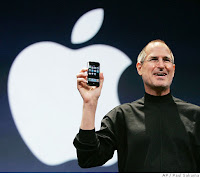
By most accounts, Steve Jobs' much anticipated press conference wasn't as exciting as many had hoped it would be. While there was no news of The Beatles catalogue being added to iTunes, Jobs, Apple’s CEO, did unveil a new version of the iPod Nano. To read more about the conference, click here.

The anticipation surrounding the press conference shows how popular digital music has become and how Apple dominates the market. A key factor in the popularity of digital music is the devices that we can use to access digital media. Prior to iPods and other MP3 players, the dominate form of digital music was the compact disk. While CDs were a vast improvement over cassette tapes, in both the quality of the music and the quality they were able to hold, they required a bulky CD player and music had to be purchased at a brick-and-mortar store, not on-online.

While there were a few MP3 players available to the public in the late 1990s, the first widely successful player, the iPod, was first released in 2001. Along with the iPod, Apple launched the iTunes Store, which allowed users to download music legally.

In seven short years, the technology behind the iPod has greatly improved. Hard drive space has increased from 50 gigabytes to 500, iPods now have the capability to play video, and all iPods now include a color display.

One of the hallmarks of evolving technology is convergence, or combining different media in one unit, and Apple embraced this idea with the iPhone. This unit, launched in 2007, combined all of the features of the iPod, including music storage and playback and video playback, with the features of a cell phone. It also included new technology such as a touch-screen interface and video voicemail. This is the ultimate example of media convergence, and show’s that Apple has adapted its product line to embrace new technology.

So what’s next for the iPod, iPhone and digital music in general? While Steve Jobs didn’t address this at his press conference, there is, as always, much speculation about what new features will be included in future iPods. I think that it will only be a matter of time before iPod users will be able to access the iTunes store wirelessly directly from their iPods or iPhones. With Wi-Fi becoming increasingly popular, this would be a logical path for Apple to take. But we will just have to wait for Steve Jobs’ next press conference to see exactly what he has in store his iPods.